

The Psychology of Beauty:Why Environment Shapes How We Feel.
What if beauty was never superficial at all? Drawing from years working across mental health, hospitality, design, and technology, this article explores the psychology behind why humans are so deeply affected by the environments they spend time in. From luxury hotels to digital experiences and AI, the spaces we move through shape our emotions, behaviour, stress levels, and sense of wellbeing far more than we realise.
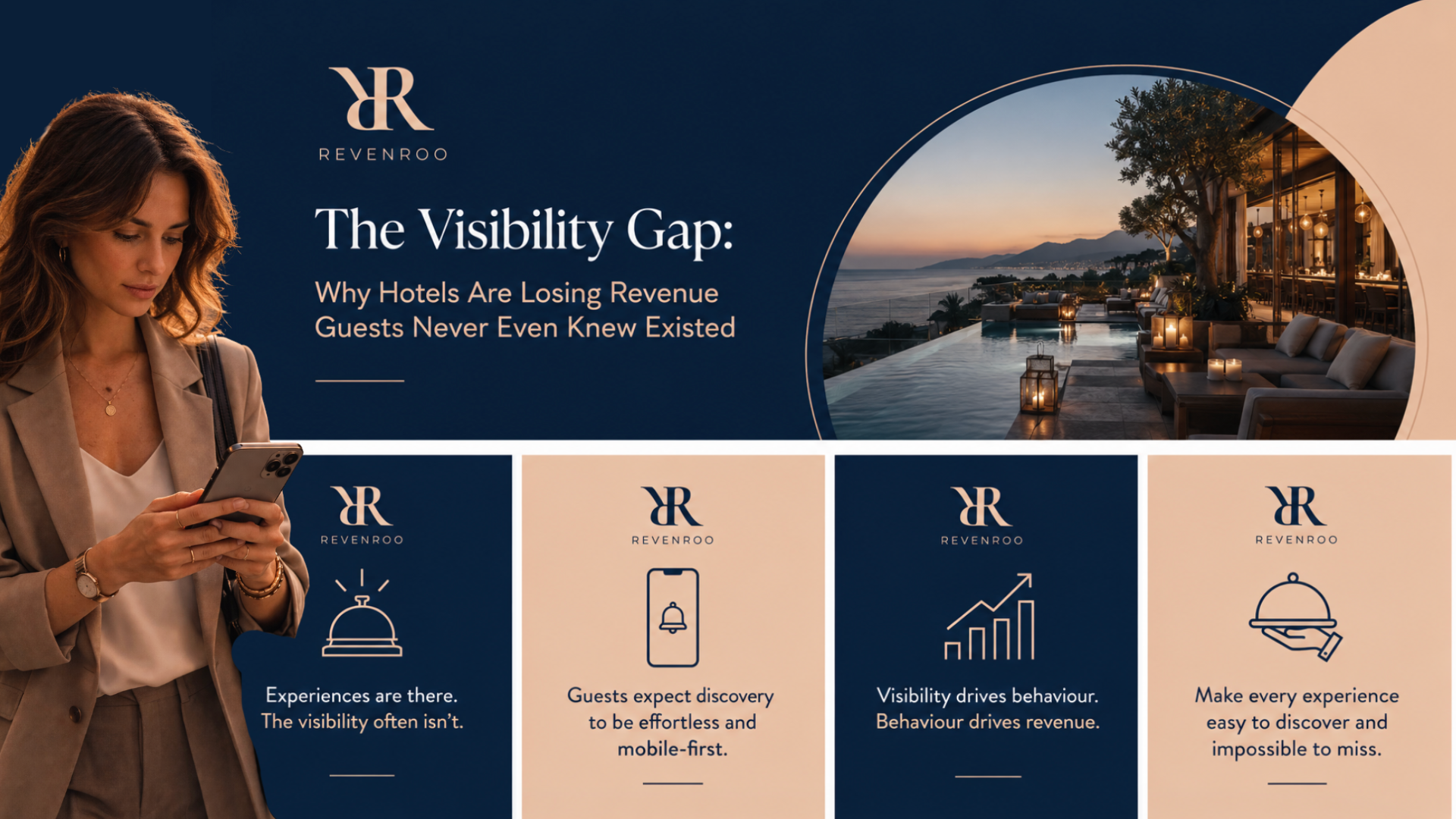
The visibility gap: why hotels are losing ancillary revenue guests never discover
The hospitality industry has spent years optimizing room distribution.
But many hotels are still under-optimizing what happens after guests arrive.
Across hospitality, there’s a growing visibility gap inside the guest journey itself.
Hotels are investing heavily into wellness, dining, experiences, rooftop venues, destination programming and premium amenities. Yet large parts of that inventory often remain under-discovered during the stay.
Not necessarily because demand is missing.
But because visibility is.
Guests increasingly default toward what feels easiest and most visible in the moment. And in many properties, discovery still still relies on fragmented systems, static information or disconnected guest experiences.
The commercial impact of that is becoming harder to ignore as ancillary revenue continues growing in importance across hospitality.
I wrote about why discoverability may become one of the industry’s next major competitive advantages — particularly in the era of mobile-first travel and conversational AI.

The Next Layer of Hospitality Intelligence: Understanding the Guest Journey
Hotels have long measured bookings, revenue and occupancy, but the journey guests take through a property has often remained invisible. Guest Journey Intelligence explores how guests discover experiences, what captures their attention, and how those moments shape engagement across the stay.